

Growing Produce
Year-Round Gardens
Early Morning Harvest saw a dream take root in 2010, when Jeff’s long-imagined aquaponics greenhouse finally came to life with the arrival of the first tilapia. He likes to say he “planned the greenhouse in his head while cutting hay,” and before long he was lovingly repurposing old farm buildings—turning familiar beams and weathered boards into a warm, living space filled with promise.
Since then, the greenhouse has held both experiments and everyday blessings. Jade and Geraniums are still stretching toward the light, while steady favorites like kale and cherry tomatoes fill baskets week after week. It’s a place of learning and care, where growers work together to keep the system in gentle balance. And if you wander through on a tour, you might spot the farm’s own grains tucked among the greenery—a quiet reminder that everything here is grown with patience, purpose, and heart.
How We Grow Produce
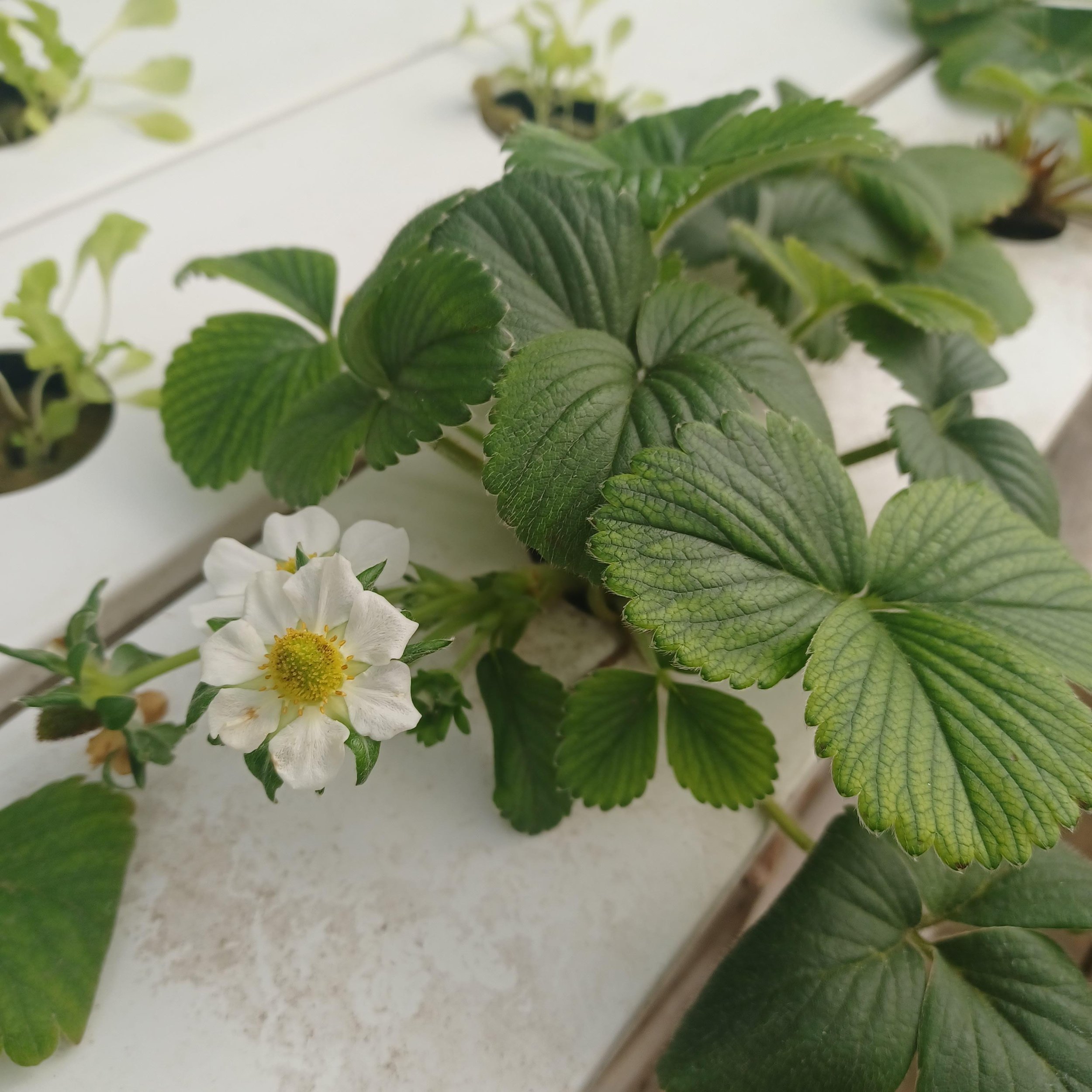
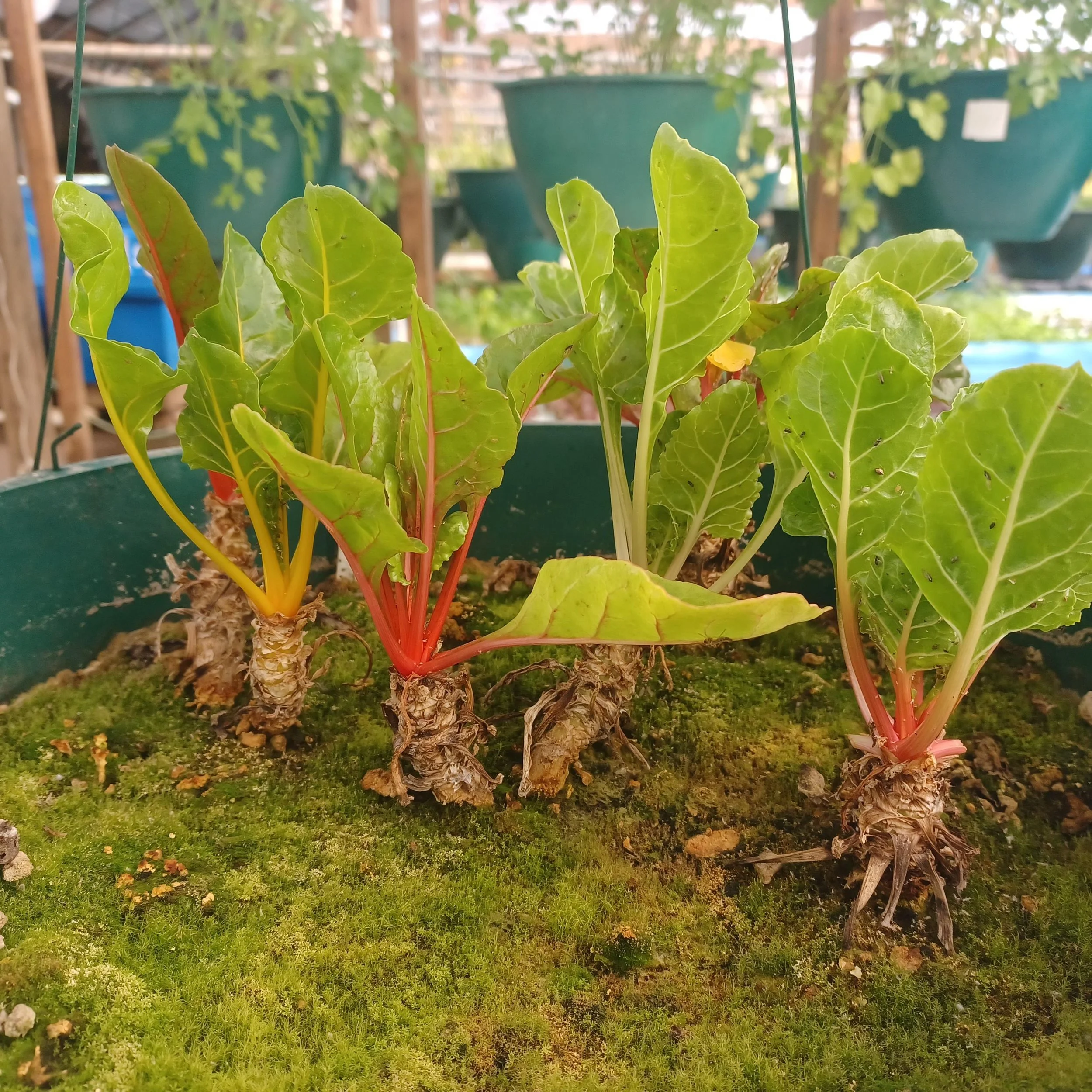
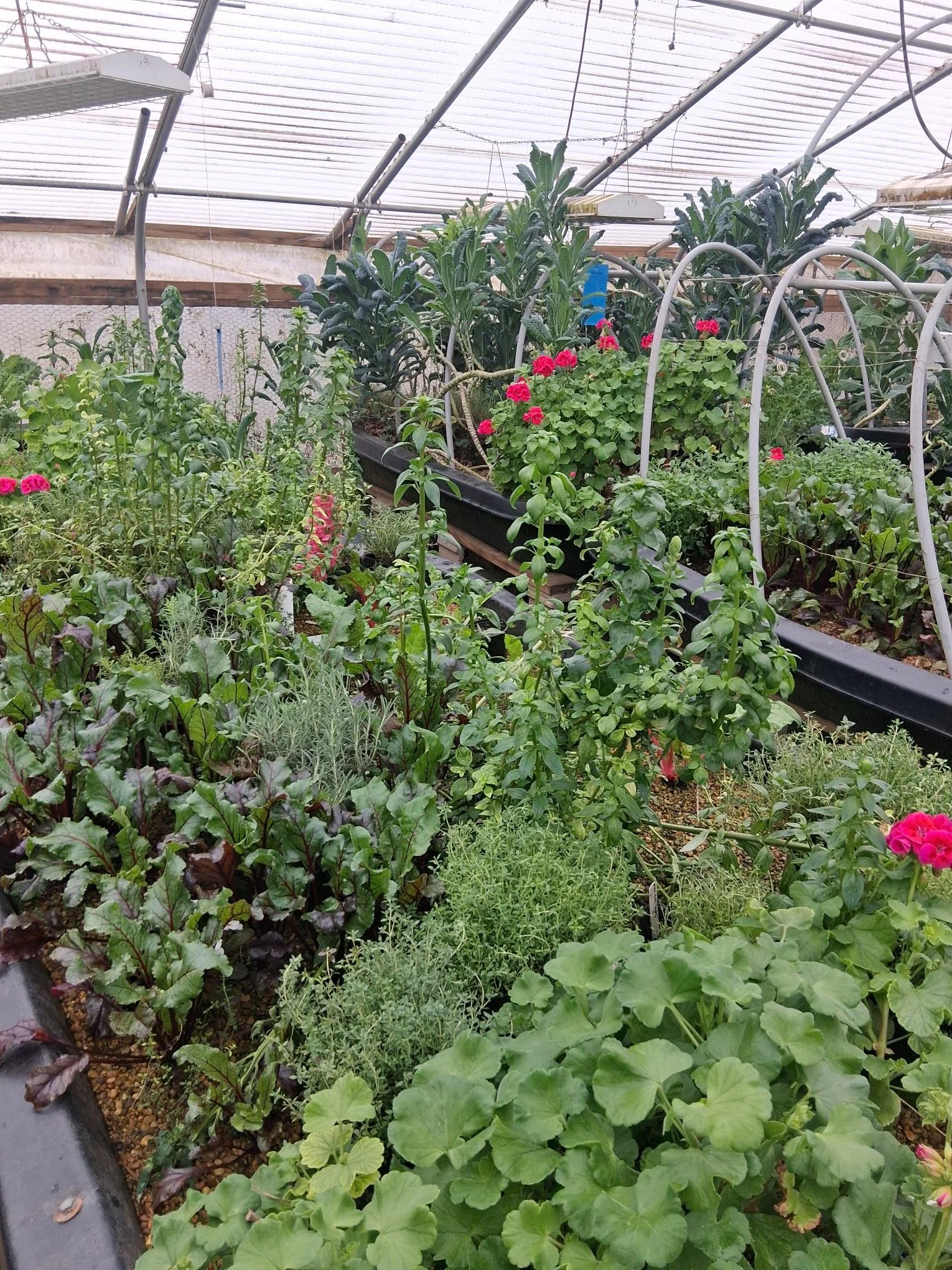
Greenhouse Growing Systems
Our greenhouse spaces are designed to support healthy plants through natural balance, careful observation, and a commitment to clean growing practices. Rather than relying on synthetic inputs, we focus on creating systems where plants, water, and beneficial microorganisms work together.
Aquaponics
Our aquaponics system brings fish, plants, and microbes into a shared, living cycle. The fish naturally provide nutrients for the plants, while the plants help filter and clean the water—creating a balanced, regenerative environment within the greenhouse. Beneficial microorganisms play an essential role, converting nutrients into forms plants can readily use.
To keep the system thriving year-round in Iowa’s climate, water is carefully managed to maintain consistent conditions for both fish and crops. Seasonal changes still play a role—cooler temperatures in winter and warmer, sun-filled days in summer—but the system is designed to adapt and remain productive.
Maintaining this balance takes daily attention. Our growers closely monitor water quality, including pH levels, and thoughtfully select crops that perform well in an aquaponic environment. Because the health of the fish and plants are interconnected, no pesticides or synthetic chemicals are used—ensuring both system integrity and clean, high-quality food.
Hydroponics
Alongside aquaponics, our hydroponic growing focuses on plant health through diversity and natural relationships. We use companion planting, beneficial herbs, and flowering plants to support pollinators and naturally deter pests. This approach helps create a resilient ecosystem where plants can thrive without chemical intervention.
By nurturing balance within the greenhouse, we’re able to grow fresh, vibrant produce while staying true to our regenerative organic values.
Orchard
Our orchard, first planted in 2004, features a small but diverse selection of fruit. After sustaining damage during the 2020 derecho, we’ve continued to restore and replant, with new trees added in 2023. The orchard remains an evolving part of the farm, growing stronger with each season.
Outdoor Gardens
Our outdoor garden spaces are continually growing and evolving. As we expand, we’re focused on researching and planting a wider variety of produce to meet the needs of our customers—always guided by regenerative practices that build soil health and support long-term sustainability.

The Growing Process

STEP 1
Our growers start over 2,000 seeds a week in grow-cubes under lights with a specific light spectrum to promote plant growth.

STEP 2
We transplant the seedlings to their specific location. (In the picture, this is a hydroponic bed.) Depending on the variety, the plants will be harvested in as early as seven weeks (some lettuce varieties) or continue to grow for several months, until the plant reaches maturity.

STEP 3
Great care is taken to harvest a pristine crop for our customers. Harvesting produce can be very time-consuming, so we are always evaluating ways to grow produce to make it more efficient.

STEP 4
We have a certified processing room where our growers finalize and package the produce that is ready for customers to enjoy.

STEP 5
Our on-site farm store features a full selection of the grains and foods we grow right here at Early Morning Harvest. If you’re looking for something specific, feel free to reach out and check availability. When it’s in stock, we’re happy to have your order ready for pickup within 24 hours.