

Farm-Grown Products
Produce
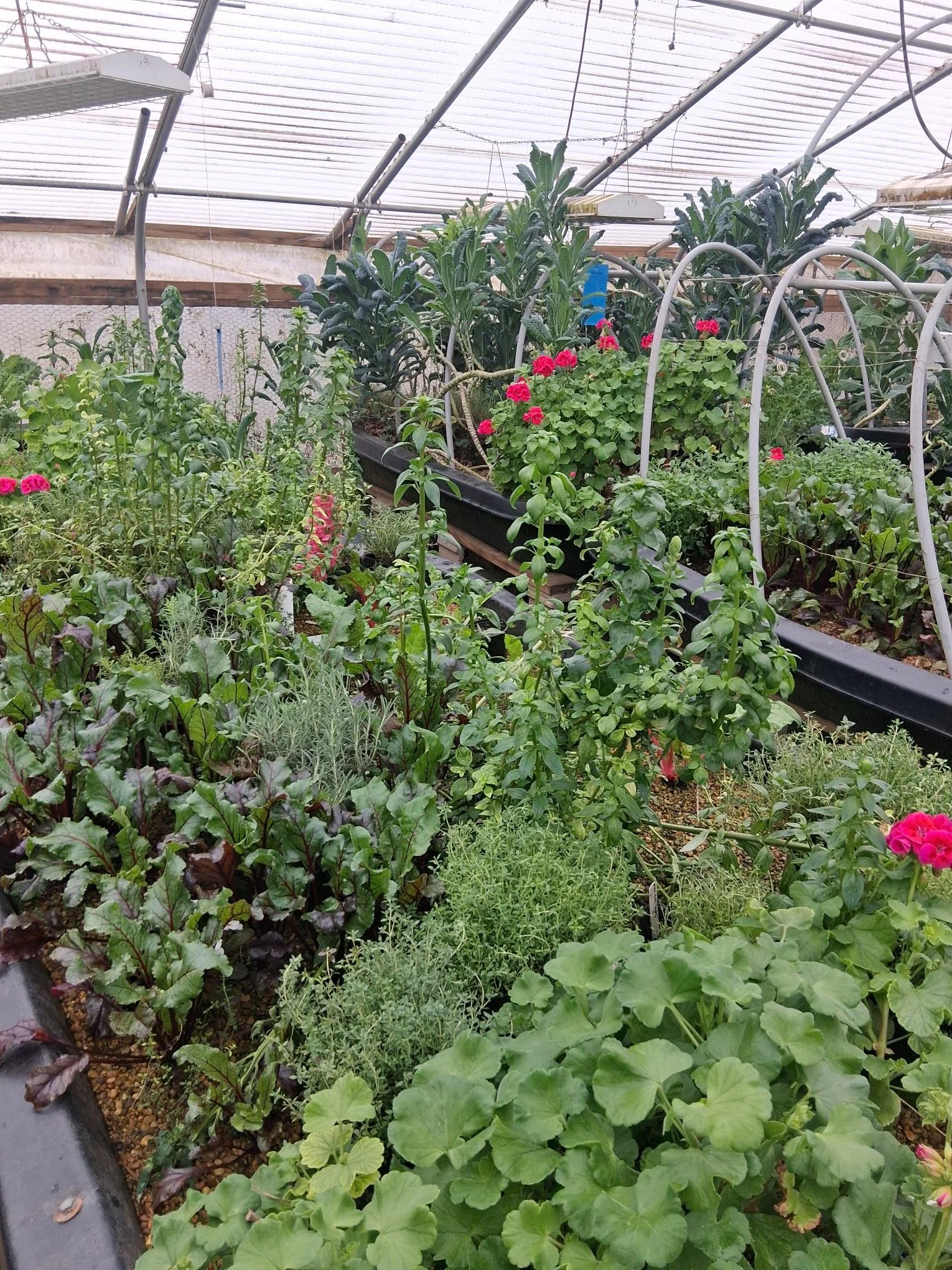
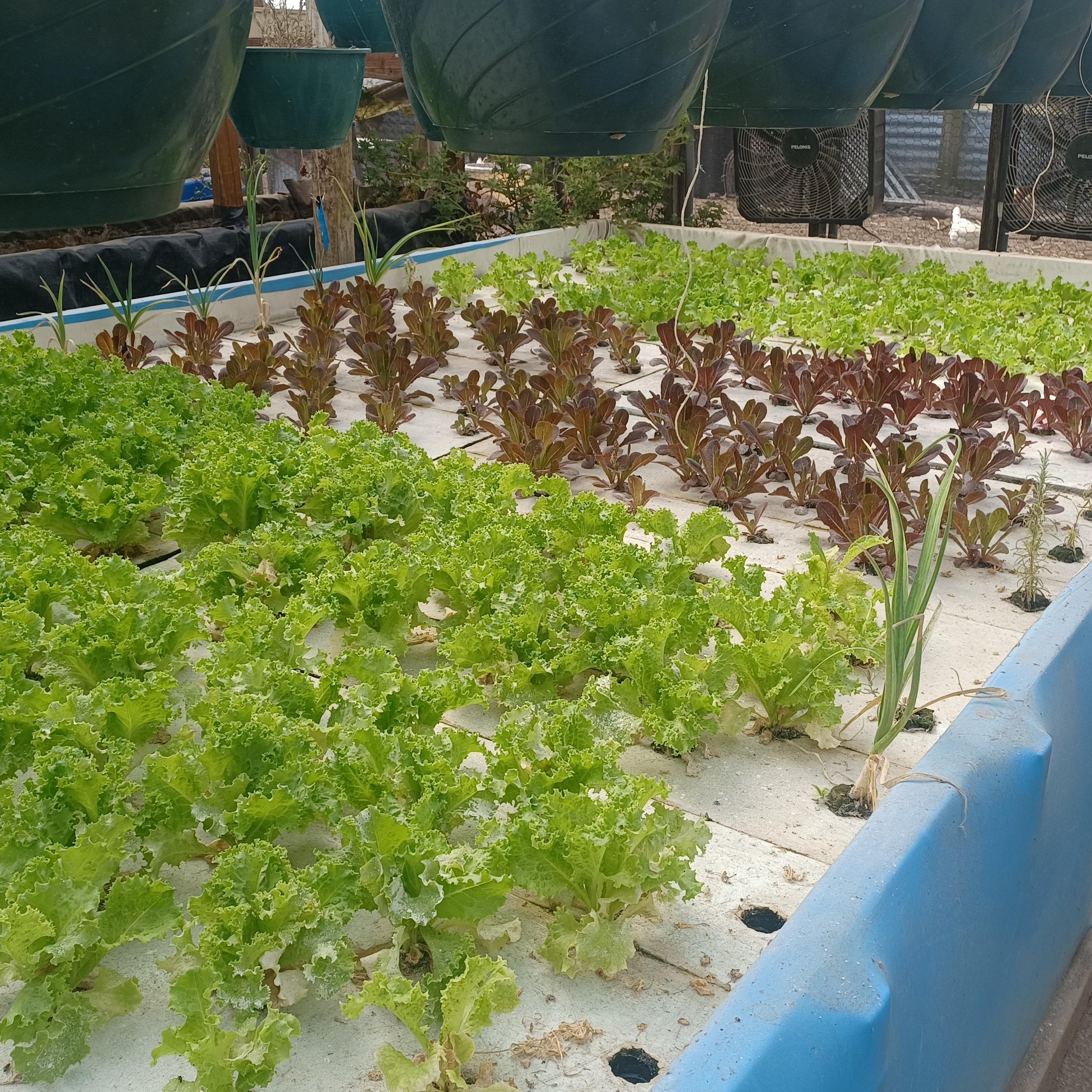
Early morning harvest grows produce in aquaponic, hydroponic, and seasonal greenhouses, plus an outdoor garden and an orchard. Its aquaponics greenhouse is heated, which means produce harvesting happens year-round! We follow organic practices and believe in raising produce without harmful chemicals or pesticides. Our starter seeds are non-GMO and most are organic. (The garden and greenhouses are not certified organic.)
Seasonal Availability:
Greens: Arugula, broccoli greens, cabbage leaves, horseradish leaves, mustard greens, spinach
Brassicas: Broccolini, kale, cabbage, bok choy, broccoli
Roots: Radishes, carrots, beets
Herbs: Basil (multiple varieties), mint (multiple varieties), cilantro, dill, dill weed, lemon balm, rosemary, sage, chives, garlic chives, lavender
Legumes: green beans, purple beans, yellow beans
Fruits: apples, pears, tart cherries, Aronia berries, strawberries, raspberries, plums
Perennials: Asparagus, rhubarb, horseradish
Alliums: onions, garlic, garlic greens
Cucurbits: cucumbers, melons, gourds, summer squash
Nightshade: peppers (multiple varieties), tomatoes (multiple varieties)
Edible Flowers: multiple varieties
(We grow many varieties within these produce categories. Visit our farm store in person or contact Early Morning Harvest if you are looking for a certain variety.)
Produce and herbs Year-round:
Beet Greens
Chard
Collard Greens
Cutting Celery
Kale
Nasturtium
Oregano
Parsley
Thyme
Salad Mix
Stop into the farm store today
and see what else is growing.
Open 10am-3pm Monday-Saturday
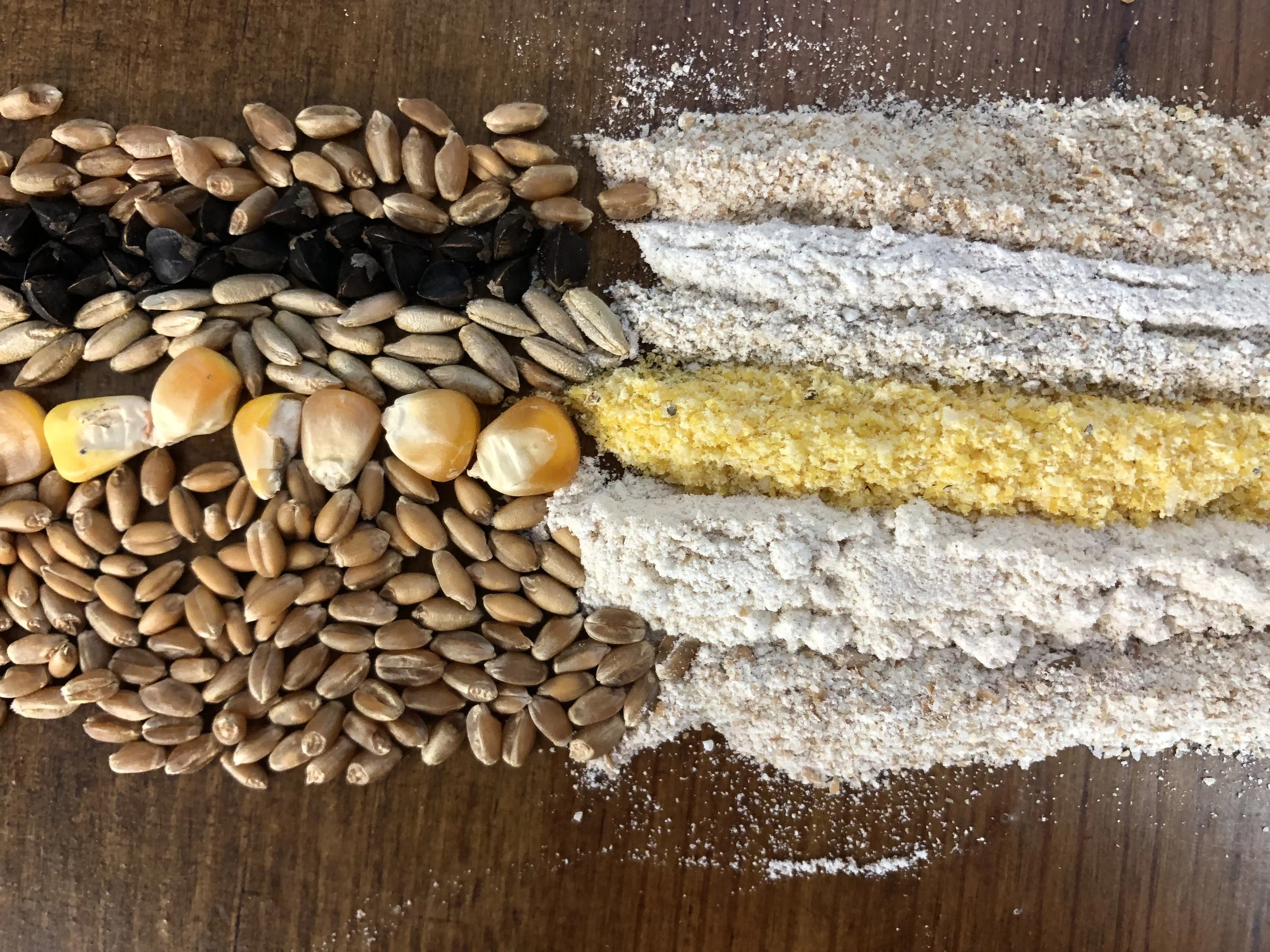
A variety of Early Morning Harvest grains & stone-milled flours.
Organic Grains
Early Morning Harvest grows certified organic grains on our Panora, Iowa farm, which we stone-grind into flours, meals and cereals. Small grains, like wheat, rye, and buckwheat, are primarily used as cover crops, while corn and soybeans are planted in rotation with the small grains. All grains can be transformed into delicious flour, perfect for bread, muffins, and even cereal. We like to mill our grains fresh for our customers, so we only keep a small flour supply on hand.
For nearly a decade, Early Morning Harvest has harvested “made-grade” grain. This means the high-quality grain seeds may be used for a variety of purposes including milling into flours. The grain is tested for aflatoxin, vomitoxin, ash content, and test weight. Also, the falling number is tested, which is an indication of how well the grain starches will ferment and hold up during baking.
Early Morning Harvest mills:
Organic Corn
Organic Buckwheat (seasonal)
Organic Hard Red Spring Wheat (higher protein)
Organic Soft Red Winter Wheat (lower protein)
Organic Winter Rye
Organic Oats, hull-less
These grains produce twenty unique products all determined by the set-up of the mill.
Planting & Harvesting Grains
Thanks to our hydroponics and aquaponic greenhouses, we grow produce all year long. But that isn’t true for our grains, which are grown outdoors. Explore the dropdown menu to see when we plant and harvest our organic grains.
-
Planting Oats
Planting Hard Wheat
-
Planting Oats
Planting Hard Wheat
-
Plant Corn (after May 10th) + hoe and cultivate corn until it is too tall to get equipment through
Plant Beans (late May)
-
Plant Corn + hoe and cultivate corn until it is too tall to get equipment through
Plant Beans
Plant Buckwheat (Planting #1)
-
Harvest Oats
Harvest Hard Wheat
Harvest Soft Wheat (from Fall planting)
Harvest Winter Rye (from Fall planting)
Plant Buckwheat (Planting #2)
Bale Straw
-
Bale straw
Plant Buckwheat (Planting #3, before August 10th)
Harvest Buckwheat (Planting #1)
-
Plant Winter Rye (late September)
Harvest Buckwheat (Planting #2)
-
Plant Winter Rye
Plant Soft Wheat
Harvest Soybeans
Harvest Corn
Harvest Buckwheat (Planting #3)
-
Plant Winter Rye
Plant Soft Wheat
Harvest Corn
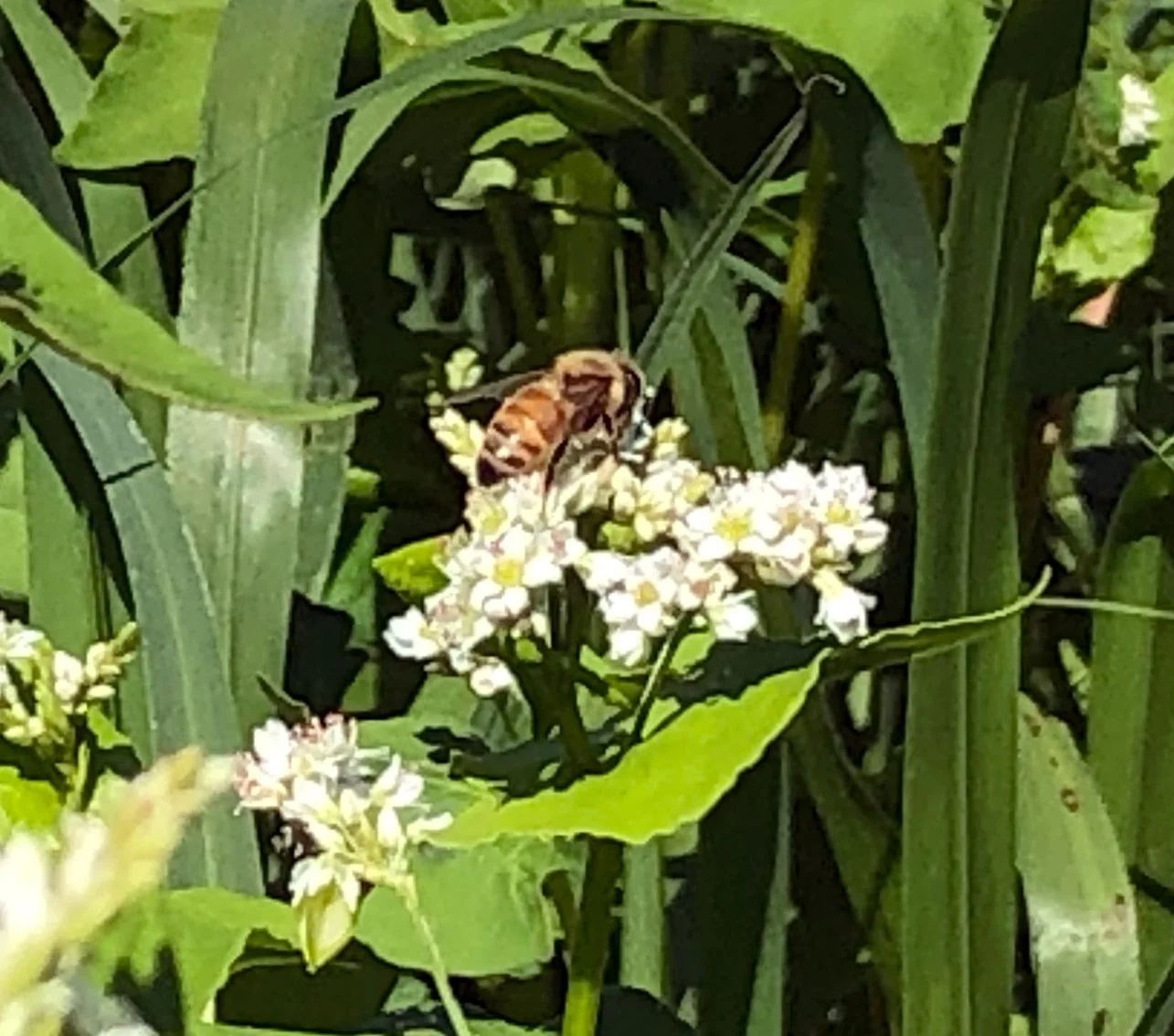
A bee gathers pollen from a buckwheat flower.
Honey
Across the Early Morning Harvest organic farm, hundreds of busy bee hives hum with life throughout the growing season. These hardworking pollinators gather nectar from the diverse flowers that surround our fields, creating the rich, flavorful honey we’re proud to share.
Our clover honey is harvested from hives nestled near the conservation buffer strips that border our fields, where bees forage among blooming clover and wildflowers. Our buckwheat honey comes from hives placed right within the buckwheat fields, producing a darker, more robust honey with a distinctive character.
Because our bees follow the natural rhythm of the seasons, you may notice subtle differences in flavor from one batch to the next. As different flowers bloom and fade, the bees gather nectar from new sources—making each harvest a small reflection of the landscape and the time of year.
Early Morning Harvest gathers:
Clover honey
Buckwheat Honey
FUN FACT: Did you know that honey never spoils? If your honey ever begins to crystallize, just heat it on the stove and it will return to its original form.

Our hens relaxing in a nesting box.
Eggs
At Early Morning Harvest, our flock of more than 100 pasture-raised hens spends their days just as nature intended—roaming green grass, scratching for bugs, and enjoying a varied diet that includes legumes and fresh vegetable trimmings from our farm kitchen. Our hens are never given hormones or antibiotics, and their diverse breeds produce a beautiful assortment of eggshell colors, from light brown and deep chocolate to soft shades of green.
That wholesome lifestyle shows up in every egg. Crack one open and you’ll find rich, golden-orange yolks that stand tall in the pan and deliver the kind of flavor only pasture-raised eggs can offer.
Studies have shown that eggs from pasture-raised hens can be significantly more nutrient-dense than conventional eggs—often containing higher levels of Vitamin A, Omega-3 fatty acids, Vitamins E and D, and beta-carotene. The difference in nutrition is remarkable, and the difference in taste is something you’ll notice from the very first bite.